

Description
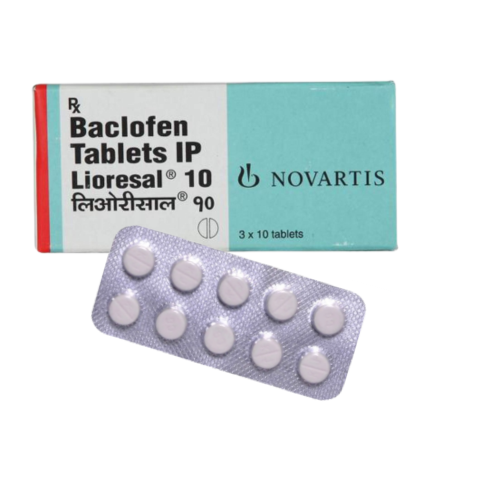
Lioresal 25 mg is a prescription oral medication containing Baclofen, a well-established centrally acting muscle relaxant. It is mainly used to treat muscle spasticity, a condition commonly associated with multiple sclerosis (MS), spinal cord injuries, or other neurological disorders. By acting on the central nervous system, Lioresal reduces involuntary muscle stiffness, spasms, and pain, improving mobility and quality of life in affected individuals.
What is Lioresal 25 mg?
Lioresal 25 mg contains Baclofen, which belongs to the class of gamma-aminobutyric acid (GABA) analogues. It exerts its therapeutic effects by binding to GABA-B receptors in the brain and spinal cord, leading to a reduction in the transmission of nerve signals that cause abnormal muscle contractions.
Medical Uses of Lioresal 25 mg
Lioresal 25 mg is prescribed for the treatment of muscle spasticity due to:
- Multiple Sclerosis (MS)
- Spinal cord lesions
- Spinal cord injuries
- Cerebral palsy (off-label)
- Stroke-induced spasticity (off-label)
By reducing muscle hyperactivity, the medication helps in improving voluntary movements, reducing pain caused by spasms, and assisting in rehabilitation therapy.
Mechanism of Action
Baclofen in Lioresal 25 mg works by mimicking the action of GABA, a neurotransmitter that inhibits nerve transmission in the brain and spinal cord. When GABA-B receptors are activated:
- There is decreased release of excitatory neurotransmitters.
- Nerve signal transmission to skeletal muscles is reduced.
- Muscle tone and stiffness are lowered.
This action is especially beneficial in neurological disorders where nerve overactivity leads to uncontrollable muscle contractions.
Strengths and substitutes
Dosage and Administration
The dosage of Lioresal is individualized and typically initiated at lower doses (e.g., 5 mg or 10 mg), with gradual titration.
- Initiation: Patients are usually started on 5 mg three times a day.
- Titration: The dose is increased every 3–5 days.
- Typical Maintenance Dose: 40 mg to 80 mg/day in divided doses.
- High-Dose Therapy: Lioresal 25 mg may be used in patients stabilized on higher daily doses.
Note: Always take Lioresal 25 mg with or without food as directed. Sudden withdrawal is discouraged due to the risk of serious side effects like seizures or hallucinations.
Benefits of Lioresal 25 mg
- Reduces Muscle Spasms: Effective relief from painful involuntary muscle contractions.
- Improves Movement: Enhances motor control and flexibility in limbs.
- Reduces Pain: Muscle spasms often cause secondary pain, which Baclofen helps alleviate.
- Improves Sleep Quality: By decreasing night-time spasms, it contributes to better rest.
Side Effects of Lioresal 25 mg
Most patients tolerate Lioresal well, but some may experience side effects. These are more likely at higher doses or during dose escalations.
Common Side Effects:
- Drowsiness
- Dizziness
- Fatigue
- Nausea
- Headache
- Muscle weakness
Serious Side Effects:
- Confusion or hallucinations
- Difficulty breathing
- Low blood pressure
- Seizures (especially with abrupt discontinuation)
- Depression or suicidal thoughts
Seek immediate medical attention if you notice any serious or unusual symptoms.
Warnings and Precautions
Before using Lioresal 25 mg, inform your healthcare provider if you:
- Have kidney impairment (Baclofen is eliminated by the kidneys)
- Suffer from epilepsy or seizures
- Have a history of mental health conditions (depression, psychosis)
- Are pregnant or nursing
- Use other CNS depressants (e.g., alcohol, opioids, sedatives)
Abrupt withdrawal of Lioresal can lead to life-threatening symptoms such as severe hallucinations, seizures, or high fever. Always taper off under medical supervision.
Drug Interactions
Lioresal may interact with several medications, potentially increasing the risk of side effects.
Known Interactions:
- CNS Depressants: Alcohol, opioids, sleep aids may enhance sedation.
- Antidepressants: Especially tricyclics, which may amplify muscle relaxation.
- Antihypertensives: May cause an additive drop in blood pressure.
- MAO Inhibitors: May increase the risk of CNS effects.
Always provide your doctor with a full list of your current medications, including over-the-counter drugs and herbal supplements.
Long-Term Use and Monitoring
For chronic conditions like multiple sclerosis, long-term use of Lioresal may be necessary. In such cases, regular medical follow-ups are essential to:
- Monitor renal function
- Evaluate neurological response
- Adjust dosage to minimize tolerance or adverse effects
- Assess mental health status, particularly in vulnerable populations
Some patients with severe spasticity may benefit from intrathecal Baclofen therapy, where the medication is administered directly into the spinal fluid using a programmable pump.
Storage and Handling
- Store the medication at room temperature (20°C–25°C).
- Keep away from moisture and direct sunlight.
- Do not use expired tablets.
- Keep out of reach of children.



Reviews
There are no reviews yet.